


A ceiling fan should do more than move air. It should also complement your home's style. While many models use plastic, metal, or engineered wood blades, solid wood ceiling fans offer a natural look that can make a room feel warmer and more inviting.
But are solid wood ceiling fans worth the investment? Do they last longer, and are they better than other blade materials? The answer depends on your priorities, including appearance, performance, maintenance, and budget.
Here is what you should know before choosing a solid wood ceiling fan.
What Makes Solid Wood Ceiling Fans Different?
The main difference is the blade material. Solid wood ceiling fan blades are made from natural wood, with individual grain patterns and color variations that give each fan a distinctive appearance.
Not every wood ceiling fan uses solid wood. Some models feature MDF, plywood, wood veneer, or plastic blades with a wood-look finish. These materials can create a similar appearance, but their construction is different.
Here are three common options:
-
Solid Wood: Made from natural wood with visible grain and unique color variations.
-
Engineered Wood: Made from wood fibers, particles, or layers bonded together. It offers consistent construction and finishes.
-
Wood-Look Materials: Usually made from plastic or other materials designed to imitate natural wood.
If you specifically want real wood, check the manufacturer's product specifications before purchasing.
Why Are Solid Wood Ceiling Fans Worth Buying?
Solid wood ceiling fans offer several advantages, especially for homeowners who value natural materials and interior design.

A Natural Look That Stands Out
Real wood has a warmth and texture that printed finishes cannot fully reproduce. Its natural grain adds character without requiring additional decoration.
For example, a ceiling fan with light oak blades can complement hardwood floors, wooden furniture, and neutral-colored walls. Dark wood blades can create a stronger contrast in rooms with lighter furniture.
This makes solid wood fans a practical decorative choice for living rooms, bedrooms, and dining areas.
Suitable for Different Interior Styles
Wood blades are not limited to farmhouse or traditional homes. Their appearance depends on the blade shape, wood tone, and motor finish.
-
Modern: Light wood blades with black or brass hardware create a clean, balanced appearance.
-
Farmhouse: Natural brown wood pairs well with rustic furniture and exposed beams.
-
Minimalist: Simple three-blade designs add texture without making the ceiling look crowded.
The key is choosing a wood finish that works with your existing furniture and flooring.
A Timeless Material
Natural wood has remained popular in home design because it works with many decorating styles. Unlike some highly decorative finishes, wood does not need to follow a specific trend to look attractive.
A well-chosen solid wood ceiling fan can remain visually appealing even when you update your furniture or wall colors. However, its lifespan still depends on material quality, construction, environmental conditions, and maintenance.
What Are the Disadvantages of Solid Wood Ceiling Fans?
Solid wood is attractive, but it also has a few limitations worth considering.
Sensitive to Moisture Changes
Wood naturally responds to changes in humidity. It can absorb moisture and expand in humid conditions, then shrink as the air becomes drier. Significant or repeated changes may contribute to warping or cracking.
For this reason, solid wood ceiling fans are generally better suited to indoor spaces with relatively stable conditions. Always check the fan's location rating before installing it in a bathroom or covered patio.
Potentially Higher Purchase Cost
Solid wood models may cost more than basic plastic or engineered wood alternatives. The price depends on the type of wood, blade construction, motor, lighting, and overall design.
Whether the extra cost is worthwhile depends on how much you value natural materials and the appearance of genuine wood.
Requires Basic Maintenance
Solid wood blades need regular dusting and appropriate cleaning. Avoid excessive water, abrasive materials, and strong chemicals that could damage the finish.
A soft microfiber cloth is usually suitable for routine cleaning. Follow the manufacturer's care instructions for more specific guidance.
Solid Wood vs. Other Ceiling Fan Blade Materials
Different blade materials have different strengths. The best choice depends on your budget, design preferences, and intended use.
| Material | Main Advantages | Considerations |
|---|---|---|
| Solid Wood | Natural grain and warm appearance | Needs appropriate moisture control |
| MDF or Plywood | Consistent construction and finishes | Not the same as solid wood |
| Plastic | Easy to clean and flexible in design | Wood-look finishes may appear less natural |
| Metal | Modern and industrial appearance | Less natural visual warmth |
Solid wood is a strong option for homeowners who appreciate natural materials. However, no blade material guarantees better airflow or longer motor life.
Do Solid Wood Ceiling Fans Provide Better Airflow?
A common misconception is that solid wood blades automatically move more air than plastic or engineered wood blades. In reality, airflow depends on the complete fan design.

Blade Size and Pitch
Blade span determines the diameter of the area covered by the rotating fan. Larger fans can generally serve wider spaces when their motor and blade design are properly matched.
Blade pitch also matters. It refers to the angle of the blades and affects how they move air. Blade shape and width contribute to overall performance as well.
Check CFM and Energy Efficiency
CFM stands for cubic feet per minute and measures how much air a fan moves.
CFM per watt measures airflow efficiency. A higher value means the fan moves more air for each watt of electricity used under the stated test conditions.
When comparing ceiling fans, consider both figures rather than judging performance by blade material alone.
Consider the Motor
The motor has a major effect on airflow, noise, and energy consumption. Many modern ceiling fans use DC motors, which offer multiple speed settings and efficient operation.
Look at motor type, power consumption, airflow ratings, and available speed settings before making a decision.
How to Choose the Right Solid Wood Ceiling Fan
A beautiful fan is only a good purchase if it fits your room and installation requirements.

Choose the Right Size
Consider your room's floor area and layout before selecting a fan. A model that is too small may not provide enough air circulation, while an oversized fan can overwhelm a smaller room.
Check the manufacturer's recommended room coverage instead of relying on blade diameter alone.
Consider Ceiling Height
Downrod ceiling fans hang lower from the ceiling and are useful for rooms with higher ceilings. Flush mount fans sit closer to the ceiling and are often more suitable for spaces with limited vertical clearance.
For standard installations, fan blades should generally be at least 7 feet above the floor and 18 inches from the walls. Always follow the manufacturer's installation requirements and applicable electrical codes.
Look at the Complete Specifications
Before buying, compare these three areas:
-
Performance: Motor type, CFM, efficiency, speed settings, and noise information.
-
Convenience: Remote control, integrated lighting, dimming, and timer functions.
-
Construction: Blade material, location rating, mounting options, and warranty.
These features have a direct effect on how useful the fan will be in everyday life.
How to Maintain Solid Wood Ceiling Fan Blades
Proper care helps keep natural wood looking good and supports the fan's long-term use.
Clean Regularly: Turn off the fan before cleaning. Use a soft cloth to remove dust and avoid soaking the blades.
Avoid Harsh Products: Strong cleaners, abrasive pads, and excessive moisture may damage the finish. Use only cleaning products approved by the manufacturer.
Check for Damage: Watch for unusual wobbling, loose hardware, cracks, or changes in blade appearance. Turn off the fan if you notice abnormal movement and follow the manufacturer's inspection instructions.

Are Solid Wood Ceiling Fans Good for Bedrooms and Living Rooms?
Yes. Both rooms can be suitable for solid wood ceiling fans, provided the model is correctly sized and rated for the installation.
In bedrooms, consider motor noise, adjustable speeds, and remote control. A natural wood finish can also create a relaxed atmosphere that works well with warm lighting and neutral furniture.
In living rooms, wood blades can complement coffee tables, hardwood floors, cabinets, and other natural materials. Larger models may suit open spaces, but always check the manufacturer's recommended room coverage.
Two Solid Wood Ceiling Fans from Vaczon
At Vaczon, we believe a ceiling fan should combine everyday comfort with thoughtful design. These two models offer different ways to bring wood finishes into your home.
56-Inch Louise Downrod Mount LED Wood Blades Ceiling Fan
The 56-inch Louise ceiling fan combines a black iron housing with oak gray wood blades. Its industrial design works well in modern living rooms, farmhouse interiors, and loft-inspired spaces. It features a DC motor, six speed settings, and a reversible function.
The integrated dimmable LED light offers three color temperatures: 3000K, 4000K, and 6000K. A remote control manages the fan speeds, lighting, timer, and memory functions. Its listed airflow is 4,082 CFM, making it an option worth considering for larger rooms. Note that the product specifications identify the blade material as wood rather than explicitly confirming solid wood construction.

48-Inch Soft Brass Solid Wood Blades Ceiling Fan
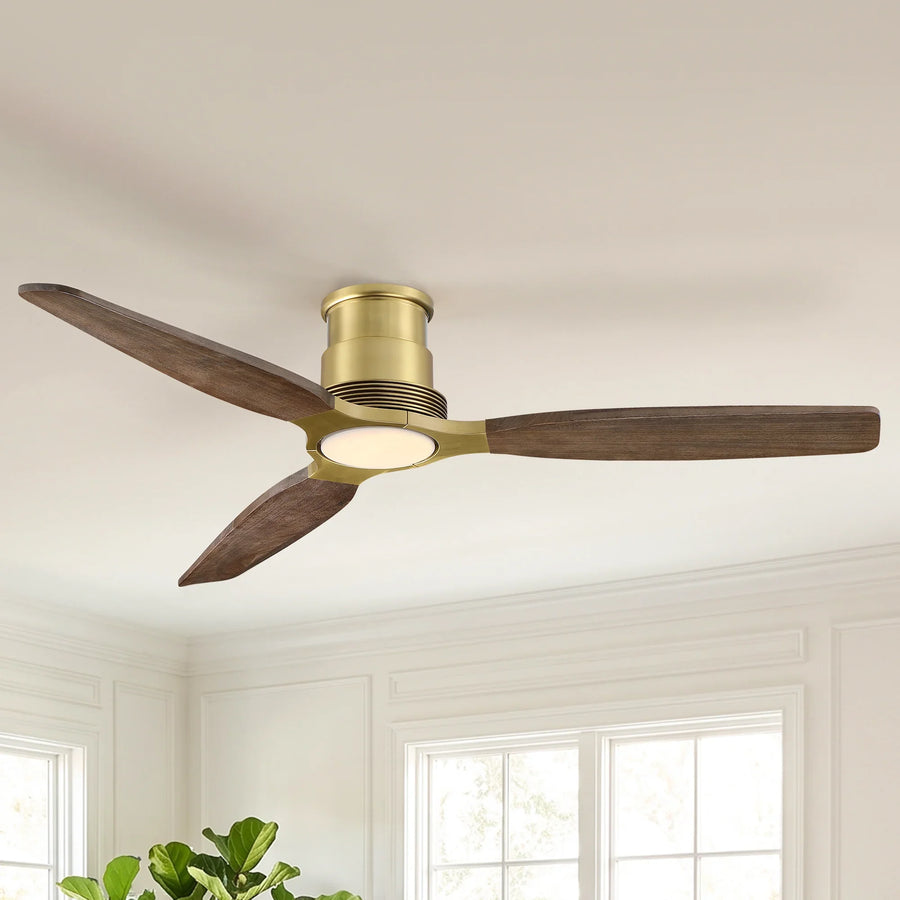
For homeowners specifically looking for genuine solid wood blades, this 48-inch model features three solid wood blades paired with a soft brass metal frame. Its natural finish and warm metal accents make it suitable for modern, contemporary, and transitional interiors.
It includes a DC motor with six speed settings, a reversible function, and an integrated dimmable 20W LED light. The included remote control allows convenient adjustment of fan speeds and lighting. With a listed noise level of 39 dB and a downrod mounting design, it offers a combination of natural materials and practical features for bedrooms and living rooms.

Final Thoughts
Solid wood ceiling fans are worth considering if you value natural materials, distinctive design, and a warm interior. However, blade material alone does not determine airflow, noise, or durability.
Compare the complete specifications, choose the right size, and make sure the fan suits your room. A well-designed model can provide both comfortable air circulation and lasting visual appeal.

